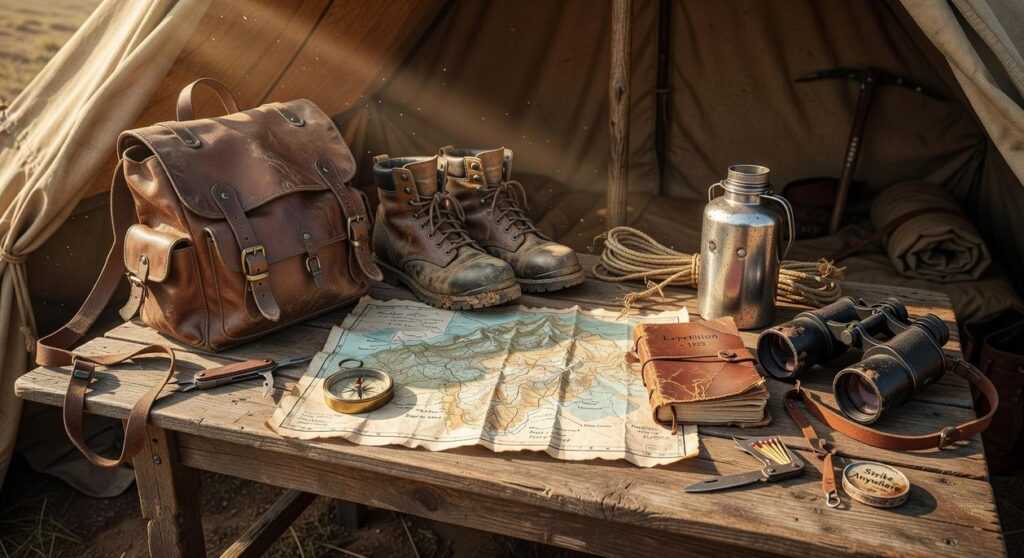
If you’re searching for practical insights into 19th century expedition survival, you’re likely looking for more than romanticized adventure stories. You want to understand how explorers actually endured brutal climates, scarce supplies, unpredictable terrain, and months—sometimes years—away from civilization. This article breaks down the real survival strategies used on historic expeditions and translates them into actionable lessons for modern wilderness travel.
We examine original expedition journals, field reports, and documented gear lists to separate myth from method. From ration planning and route selection to cold-weather shelter construction and risk management, you’ll discover what truly kept 19th-century explorers alive—and what led others to fail.
Whether you’re preparing for backcountry travel, refining your wilderness skill set, or studying historical survival tactics, this guide delivers clear, field-tested principles grounded in documented evidence. By the end, you’ll understand how expedition-era resilience and preparation still shape effective survival strategy today.
An explorer stands at the tree line, staring into a blank horizon, clutching a hand-drawn map smudged by rain and sweat. No satellites. No rescue teams. Only instinct, steel, and luck.
For him, survival was not a hobby but a daily wager against starvation, exposure, and getting irretrievably lost. That is the core of 19th century expedition survival: practical skills that kept breath in lungs.
Expect no romance. We break down:
- Building shelters from raw timber
- Rationing dwindling supplies
- Navigating by stars when maps failed
The difference between returning home and vanishing forever was preparation. Use these lessons wisely today.
The Three Great Killers: Sickness, Starvation, and the Elements
Disease on the Trail
These frontier survival lessons from 19th century expeditions not only highlight the resilience and ingenuity of early explorers but also echo the essential Mountain Expedition Techniques for High-Altitude Travel that modern adventurers rely on today.
In the era before antibiotics, disease was the most efficient killer. Historical records from the Oregon Trail estimate that roughly 1 in 10 emigrants died, with cholera, dysentery, and infections leading the toll (Oregon-California Trails Association). Scurvy—caused by vitamin C deficiency—silently weakened crews deprived of fresh produce. Malaria thrived in swampy crossings. Poor sanitation compounded everything; contaminated water carried Vibrio cholerae, and without germ theory widely accepted until the late 1800s, many travelers didn’t grasp why campsites became graveyards (a tragic lesson in cause and effect).
The Caloric Deficit
Food scarcity was relentless. A laboring adult needed 3,000–4,000 calories daily, yet rations often meant hardtack and salted pork—sometimes rancid. Hunting was unreliable; overhunting had already reduced game along major routes by mid-century. Foraging posed risks, as misidentified plants could be toxic. Starvation wasn’t always dramatic—it was gradual weakness, poor immunity, and slower travel.
Exposure and Exhaustion
Gear lagged behind environment. Wet wool lost insulation, accelerating hypothermia; frostbite could set in within minutes below freezing (CDC data on cold exposure). In tropical regions, heatstroke claimed the dehydrated. In 19th century expedition survival, the elements were indifferent—and often decisive.
The Explorer’s Kit: Essential Gear of the 1800s

Shelter and Clothing
Shelter in the 1800s meant oilskin tarps, canvas tents, and thick wool blankets. Oilskin—canvas coated in linseed oil—repelled rain at first, but once seams failed, everything soaked through. Wool retained heat when damp, yet it could absorb up to 30% of its weight in water (U.S. Army Quartermaster records, 1865), turning a blanket into a backbreaking burden. Consequently, what kept explorers alive could also slow them dangerously. Critics argue wool was “good enough” (and for many, it was), but in prolonged storms, hypothermia cases rose sharply on Arctic expeditions like Franklin’s (1845).
Tools of the Trade
A flintlock or percussion cap rifle provided hunting, defense, and signaling. A hand axe shaped shelters and split kindling. A sturdy knife handled skinning, carving, even minor surgery (grim, but documented). Meanwhile, a cast-iron pot boiled water—critical, since contaminated sources caused disease outbreaks on western trails (CDC historical data). One pot, endless uses (minimalism before it was trendy).
Navigation by Nature
Explorers relied on sextants (measuring celestial angles), chronometers (precision timekeepers), and compasses. Yet instruments failed. Dead reckoning—estimating position by speed and direction—became essential. Reading moss growth, river bends, and prevailing winds often saved lives. In 19th century expedition survival, skill mattered more than steel. Understanding the natural resources that shaped frontier communities was equally vital: natural resources that shaped frontier communities.
Core Skills for Staying Alive
Fire in the wilderness is more than heat; it is a loyal companion, a kitchen, a signal flare, and a shield against the dark. In 19th century expedition survival, flame was the difference between a camp that felt human and a night that felt endless. Explorers relied on flint and steel—striking sparks like coaxing stars from stone—or on fire pistons that compressed air until tinder smoldered. However, rain, wind, and numb fingers turned this simple act into a trial by ordeal. Building a blaze in a storm is like trying to light a candle underwater (frustrating doesn’t begin to cover it).
Meanwhile, living off the land demanded patience akin to chess. Trapping small game with snares required understanding animal paths as if reading a well-worn map. Fishing with crude hooks and hand-tied lines was a lesson in stillness; the river rewarded those who listened. Yet the riskiest gamble lay in plants and fungi. Identifying edible berries from poisonous lookalikes was botanical roulette, where one mistake could silence a journey.
And then there was water. Finding it meant reading terrain like a detective—following green corridors of vegetation or the murmur of insects at dusk. Purification, however, circled back to fire. Boiling was the frontier’s insurance policy, killing unseen threats in a rolling pot. Without flame, even a clear stream could be a hidden adversary.
Pro tip: always gather tinder and fuel before dusk, because darkness shrinks options faster than hunger ever will. Preparation is quiet power.
Lessons from the Lost and the Found
The Franklin Expedition is often described as heroic, but it is better understood as a failure of preparation. The crew entered the Arctic with limited cold-weather experience and relied heavily on tinned food, a new technology at the time. Those tins were poorly sealed, causing lead poisoning—meaning toxic metal buildup in the body—along with starvation.
By contrast, Lewis and Clark’s Corps of Discovery treated 19th century expedition survival as a systems problem. They planned routes, stockpiled supplies, and, crucially, practiced diplomacy. Diplomacy here means building cooperative relationships, especially with Native American tribes who shared local knowledge about food, terrain, and wintering.
The takeaway is simple:
- Adaptability beats rigid tradition.
- Local knowledge outweighs imported assumptions.
- Preparation determines endurance.
One expedition trusted equipment; the other trusted learning. In harsh frontiers, humility is as vital as supplies. Clarity turns chaos into calculated movement. Under pressure, wisely.
Echoes of the Frontier: Lessons for Today
In 19th century expedition survival, the pillars were simple: master fire, secure calories, trust rugged gear. (In other words, no backup batteries.) The margin for error was zero; one wet match or wrong turn could mean death.
Compare then vs now:
- Flint and steel vs stormproof lighters
- Salt pork vs freeze-dried meals
- Canvas packs vs ultralight synthetics
Modern tools outperform old ones in comfort and efficiency. Yet resourcefulness, resilience, and respect for wild places still decide outcomes. Gear has evolved; consequences have not. Choose convenience without competence, and nature wins.
Master the Wild Before It Masters You
You set out to understand what it truly takes to survive in unforgiving terrain—and now you have the blueprint. From hard-earned lessons drawn from 19th century expedition survival to modern navigation tools and field-tested gear strategies, you’ve seen how preparation separates confidence from catastrophe.
Out there, uncertainty is the real threat. Bad weather, poor planning, and the wrong equipment can turn a simple trek into a survival situation fast. But with the right wilderness skills, trail awareness, and tactical mindset, you don’t just react—you adapt and overcome.
Now it’s time to act. Apply these techniques on your next outing, refine your gear checklist, and sharpen your navigation habits before you hit the trail again. If you’re serious about staying prepared, explore our in-depth survival guides and gear breakdowns trusted by thousands of backcountry adventurers.
Don’t wait for the wild to test you. Equip yourself, train smart, and step into your next expedition ready for anything.