If you’ve ever stood before towering hoodoos, perfectly balanced boulders, or rippling stone that looks like frozen waves, you’ve probably wondered how these natural wonders came to be. This article explores the fascinating world of strange rock formations science, breaking down the geological forces, environmental conditions, and slow-moving natural processes that shape some of the planet’s most unusual landscapes.
Many outdoor enthusiasts and curious explorers search for clear, trustworthy explanations that go beyond myths and speculation. Here, you’ll find research-backed insights drawn from established geological studies, field observations, and real-world examples from remote wilderness regions. We connect scientific principles with practical outdoor knowledge, so you not only understand how these formations develop—but also what to look for when you encounter them on the trail.
By the end, you’ll have a deeper understanding of the natural forces behind these remarkable structures and the confidence to recognize and interpret them wherever your adventures take you.
Reading the Earth’s Story: A Field Guide for the Curious Explorer
Every cliff face is a chapter, every canyon a plot twist. Geology is the study of Earth’s physical structure and the processes that shape it over time. When you hike, slow down and OBSERVE. Note rock layers (called strata), grain size, and faults—cracks where tectonic plates have shifted.
Use this simple field framework:
- Identify rock type: igneous, sedimentary, metamorphic.
- Look for deformation: folds, tilts, fractures.
- Ask what force—water, wind, magma—did the work.
This is strange rock formations science in action, turning scenery into STORY. Think deeper.
The Field Geologist’s Toolkit: Essential Gear for Landscape Investigation
Beyond the boots and backpack, a true landscape investigation begins with precision tools. First and foremost, the hand lens (also called a jeweler’s loupe) magnifies mineral grains up to 10x, revealing crystal shape, size, and arrangement. Quartz appears glassy and irregular, while feldspar shows blocky cleavage. Grain boundaries tell you whether a rock cooled slowly underground or erupted in a hurry (nature’s version of slow-cooked vs. flash-fried).
Next, consider a compass with clinometer. This tool measures strike and dip—the orientation and tilt of rock layers shaped by tectonic forces. To do it simply: (1) Align the compass edge along the rock layer to find strike. (2) Level the compass and record the bearing. (3) Use the clinometer to measure dip angle downhill. (4) Note direction of dip. Suddenly, hillsides read like folded maps.
Equally important, keep a field notebook. Sketching formations forces you to notice layer thickness, rock contacts, and fault lines—details photos often miss. In strange rock formations science, context is everything.
Other useful items include a responsibly used rock hammer, diluted acid for carbonate testing (calcite fizzes), and a GPS to log precise coordinates. Pro tip: record weather conditions—they influence rock color and visibility.
Decoding the Landscape: Identifying Three Foundational Features
Feature 1: Unconformities – Gaps in Time.
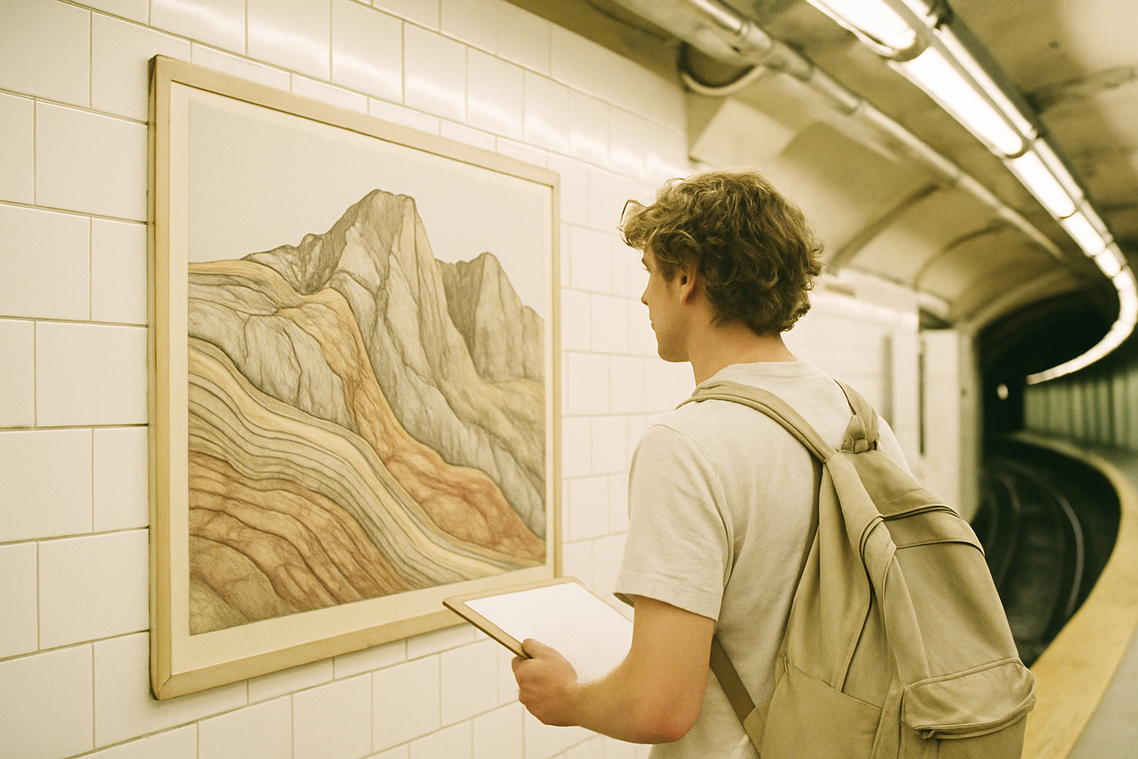
An unconformity is a buried erosional surface, meaning wind, water, or ice once stripped away older rock before newer layers settled on top. It represents missing time—sometimes millions of years, according to the U.S. Geological Survey. A ranger once told me, “You’re looking at a HISTORY BOOK with pages ripped out.” Spot one by finding tilted or folded layers directly beneath flat, horizontal beds.
Feature 2: Folds – When Rocks Bend.
Folds form under pressure. An anticline arches upward; a syncline dips downward. At a canyon overlook, a geologist laughed, “Think of it like a rug pushed across a floor.” Watch the curve of layers in road cuts; the direction tells you which fold you’re seeing.
Feature 3: Faults – Evidence of Earthquakes.
Faults are fractures where rocks moved. Look for offset layers, slickensides—polished, grooved surfaces—and fault breccia, a jumble of broken, angular fragments. After a tremor, a local guide said, “The mountain slid, and it left scars.”
• CAPS MATTER when reading landscapes.
• strange rock formations science helps decode patterns.
• Explore further with the worlds most remote hiking trails and what makes them unique
These clues turn silent stone into testimony. When you pause and trace the lines with your eyes, you’re reading motion frozen in place, proof that Earth is never truly still. Next time someone says rocks are boring, smile and point to the evidence beneath their boots. The ground remembers everything, even if we forget. Look.
Case Study: Reading the Story of a Granite Intrusion
When geologists talk about a granite intrusion, they mean molten rock that forced its way into older, solid rock. Think of it like caramel injected into a chocolate bar — messy, dramatic, and revealing. The goal is to read that scene clearly, because every contact tells a story.
Step 1: Identify the contact. The contact zone is the boundary where the magma met the existing country rock, meaning the rock that was already there. You often spot it as a sharp change in color, texture, or mineral makeup.
Step 2: Look for contact metamorphism. Metamorphism simply means change under heat and pressure. Around an intrusion, the heat creates a baked zone, where the country rock becomes harder and its minerals recrystallize. This hardened halo is critical evidence, a geological fingerprint explained in strange rock formations science as thermal alteration.
Step 3: Analyze xenoliths. Xenoliths are fragments of country rock trapped inside the cooling granite. Picture raisins suspended in bread dough. Because these pieces had to exist before they were engulfed, they prove the granite is younger than the rock it invaded. Could it be clearer?
Step 4: Apply the principle of cross-cutting relationships. This principle states that a feature cutting another must be younger than what it cuts. By tracing the contact, confirming the baked zone, and noting xenoliths, you reconstruct the sequence of events. First came the country rock; afterward, the granite forced its way through, sealing place in time.
From Observation to Understanding: Your Next Steps in the Field
Before you swing a rock hammer, pause. Safety and ethics come FIRST. Leave No Trace means minimizing impact, respecting private land, and following local regulations on collecting specimens. Some argue that taking a small sample “doesn’t matter.” But multiplied by thousands of visitors, small impacts become real damage (just ask any over-loved national park). Responsible exploration protects both landscapes and access for future hikers.
Next, turn wandering into investigation. Topographic maps show elevation changes—clues to erosion patterns and exposed strata. Geological maps identify rock types and fault lines, helping you predict what you’ll see before you lace up your boots. Why leave discovery entirely to chance? A little planning transforms a casual hike into a FIELD STUDY.
To sharpen your skills, practice deliberately. Look for layering in road cuts, mineral crystals in building stones, or fossils in creek beds. The more you observe, the faster you interpret. Some skeptics say this level of detail “takes the fun out of it.” I’d argue the opposite: understanding deepens awe (think of it as strange rock formations science in action).
For deeper learning, explore:
- Local geological surveys
- University geology departments
- Reputable online databases
PRO TIP: Start local. Master familiar terrain before tackling remote backcountry.
You set out to understand the forces behind the world’s most unusual landscapes—and now you have the clarity to see them differently. From wind-carved arches to gravity-defying pillars, the principles of strange rock formations science reveal that these natural wonders aren’t random at all. They’re the result of time, pressure, erosion, and persistence.
If you’ve ever felt uncertain navigating rugged terrain or struggled to interpret the land around you, that uncertainty can cost you confidence—and even safety. Knowing how formations develop helps you read the environment smarter, choose better routes, and anticipate hazards before they become problems.
Keep Exploring with Confidence
Now it’s time to put this knowledge to work. Study the terrain before your next trek, refine your navigation skills, and upgrade your field awareness with trusted guidance used by thousands of serious outdoor enthusiasts. Don’t let confusion slow you down—equip yourself with proven wilderness insights and step onto the trail prepared, capable, and ready for whatever the landscape throws your way.