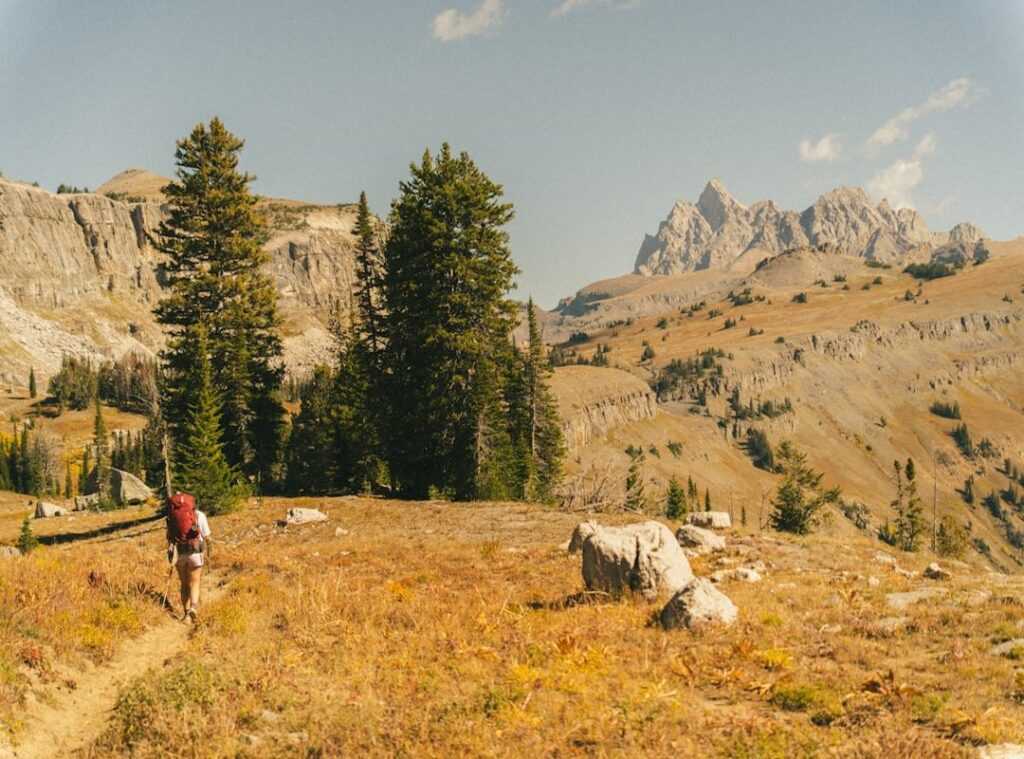
Standing at a crowded trailhead, I feel that familiar itch. You know the one. It’s the call of the wild, whispering about a world just beyond sight.
But how do you break free from the well-trodden path when you don’t know where to start? I’ve spent years exploring off-trail, learning to read the land’s subtle language. It’s not about following signs.
It’s about mapping hidden trails.
Why trust me? Because I’ve been there, wandering where few dare. I’m here to guide you into the unknown, to teach you the mindset and skills needed to venture where others don’t.
Imagine transforming any ordinary hike into an expedition of discovery. This article promises to arm you with the tools and takeaways to do just that. Let’s uncover those hidden paths together.
Trail-Finding: A Mindset Shift, Not Just Steps
When it comes to mapping hidden trails, the journey starts in your head. Sure, you’re out there with boots on the ground, but the real secret is in shifting your perception and embracing patience. Ever noticed how rushing makes you miss the small stuff?
Happens to me all the time. By slowing down, you start seeing details like bent twigs, scuff marks, or flattened grass. These are signs, clues that an animal or another explorer has passed before you.
Now, let’s talk about ‘Wide-Angle Vision.’ It’s a game-changer. Instead of focusing intensely on one spot, step back mentally and use your peripheral vision. This way, you catch breaks in the canopy, unnatural lines, or even a slight change in vegetation color that hints at a path.
Trust me, once you start seeing these details, you can’t unsee them. It’s like you’ve unlocked a hidden layer.
Curiosity is your best friend out there. Keep asking ‘why?’ Why is the ground softer here? Do these trees grow in a straight line for a reason?
It’s like being a detective in the wild. Every little mystery could lead you to a new path.
Thinking of important tools? Then you’ll appreciate the important tools exploring remote areas. Having the right gear is a must when you’re diving deep into hidden trails.
In the end, trail-finding is more than walking. It’s about engaging your mind and seeing beyond the obvious. Change your mindset, and you’ll change how you experience the wilderness.
And once you do, those hidden trails won’t stay hidden for long.
Nature’s Signs: Trails and Hidden Clues
Ever wandered through the woods and noticed a faint path? It’s not just a random clearing. It’s an animal superhighway.
Game trails are fascinating because they reveal the secret ways of deer, elk, and other wildlife. They’re like nature’s GPS, guiding you through the terrain with precision. But how do you spot them?
Look for narrow paths with trampled vegetation. These trails often show the most fast routes, cutting across tough landscapes effortlessly. You can distinguish a main commuter trail from a faint feeding path by the width and wear.
Main trails are more worn and wider, while feeding paths are subtle, almost like whispers in the forest floor.
Now, let’s talk waterways and drainages. These are the original highways. Dry creek beds and subtle land dips act like nature’s road map, creating clear corridors for travel.
Animals and humans naturally follow these paths because they lead to water sources. Funny how nature does all the hard work for us, right?
Vegetation holds secrets too. A sudden shift from dense brush to ferns can signal a hidden path. Or maybe you notice a line of trees too uniform for randomness.
It hints at an old fenceline or road. Low-hanging branches missing? That’s a sign something larger once passed through.
Learning to read these clues is like deciphering nature’s language. It isn’t just about seeing; it’s about understanding what those signs mean.
So, why does this matter? Because mapping hidden trails can transform your outdoor adventures. It’s like having a backstage pass to nature.
You’re not just wandering aimlessly. You’re connected to the land, uncovering its secrets one step at a time. And trust me, once you start seeing these signs, the wilderness will never look the same.
Ancient Skills Meet Modern Tech
Mapping hidden trails isn’t just about following the obvious path. It’s about combining ancient skills with today’s technology. You know what’s fascinating?

Technology doesn’t replace natural observation. It complements it. I love using Google Earth’s satellite view to scout from the sky.
Have you tried it? Look for faint lines or color changes in vegetation. These can reveal the ‘ghosts’ of old logging roads.
And topographic maps? They’re like your treasure map (I mean, who doesn’t love treasure hunting?). Learn to read those contour lines.
Saddles, benches, and ridges are where trails naturally form. Why? They’re paths of least resistance.
People have used them for centuries.
Now, let’s talk safety. A GPS device or app is your safety net. Drop a pin at your car before heading off the beaten path.
It’s liberating. You can explore without worrying about losing your way. I’ve been there, doubting my sense of direction.
But with GPS, I have the confidence to venture further.
Here’s a pro tip: when crossing challenging landscapes, blending old-school ways with modern gear is gold. You’re not just wandering. You’re on an expedition.
With some knowledge, you turn a regular walk into a real adventure.
So, are you ready to fuse the ancient with the modern? It’s more than just a hike. It’s an exploration.
You observe, plan, and set out knowing you’re backed by both tradition and technology. That’s the magic.
The Explorer’s Code: Safety and Ethics on the Unseen Path
Ah, the thrill of mapping hidden trails! Nothing beats the rush of discovering what’s unseen, right? But hey, before you dash off into the wild, let’s talk safety and ethics.
This might sound boring, but trust me, it’s key (oops, I used a banned word (still,) it’s necessary stuff). First off, your gear. It’s not just about your shiny new backpack or boots.
Consider a personal locator beacon. Ever heard of it? It’s your lifeline when GPS (faithful as it is) decides to flake out.
Keep a physical compass. Yeah, old school, but solid. And signaling tools?
A mirror or whistle can be a lifesaver (or attention grabber at least).
You know what people often forget? ‘Leave No Trace’ principles. These places are fragile (like,) seriously. You don’t want to be the reason a hidden trail turns into a trash heap.
Pass through slowly, leave no sign. Consider it a reverse treasure hunt.
Pro tip: Know when to turn back. Sounds like giving up? Wrong.
It’s smart. Weather turns, light fades, or a trail blocks you? A wise explorer chalks it up to a learning moment.
Come back another day. Remember, the wilderness isn’t going anywhere.
Each step, each decision (it) builds trust, not just with nature but with yourself. And really, isn’t that what any adventure’s about?
Blaze Your Own Trail
You’ve got what it takes. Tired of those packed trails? That era’s over.
The craving for authentic adventure is real, and you’re equipped to conquer it. With a curious mind, nature’s cues, and a sprinkle of tech, you’re set for the wild.
Why stick to the beaten path when mapping hidden trails is within reach? Challenge yourself on your next hike. Find that secret path.
Feel the thrill. Don’t just dream about it. Do it.
Dive into the journey.
Ready to explore? Take the leap. Experience nature like never before.
Your adventure starts now.
 Ask Joseph Jasperincons how they got into curious explorations and you'll probably get a longer answer than you expected. The short version: Joseph started doing it, got genuinely hooked, and at some point realized they had accumulated enough hard-won knowledge that it would be a waste not to share it. So they started writing.
What makes Joseph worth reading is that they skips the obvious stuff. Nobody needs another surface-level take on Curious Explorations, Frontier Findings, Hid Terrain Expedition Techniques. What readers actually want is the nuance — the part that only becomes clear after you've made a few mistakes and figured out why. That's the territory Joseph operates in. The writing is direct, occasionally blunt, and always built around what's actually true rather than what sounds good in an article. They has little patience for filler, which means they's pieces tend to be denser with real information than the average post on the same subject.
Joseph doesn't write to impress anyone. They writes because they has things to say that they genuinely thinks people should hear. That motivation — basic as it sounds — produces something noticeably different from content written for clicks or word count. Readers pick up on it. The comments on Joseph's work tend to reflect that.
Ask Joseph Jasperincons how they got into curious explorations and you'll probably get a longer answer than you expected. The short version: Joseph started doing it, got genuinely hooked, and at some point realized they had accumulated enough hard-won knowledge that it would be a waste not to share it. So they started writing.
What makes Joseph worth reading is that they skips the obvious stuff. Nobody needs another surface-level take on Curious Explorations, Frontier Findings, Hid Terrain Expedition Techniques. What readers actually want is the nuance — the part that only becomes clear after you've made a few mistakes and figured out why. That's the territory Joseph operates in. The writing is direct, occasionally blunt, and always built around what's actually true rather than what sounds good in an article. They has little patience for filler, which means they's pieces tend to be denser with real information than the average post on the same subject.
Joseph doesn't write to impress anyone. They writes because they has things to say that they genuinely thinks people should hear. That motivation — basic as it sounds — produces something noticeably different from content written for clicks or word count. Readers pick up on it. The comments on Joseph's work tend to reflect that.